
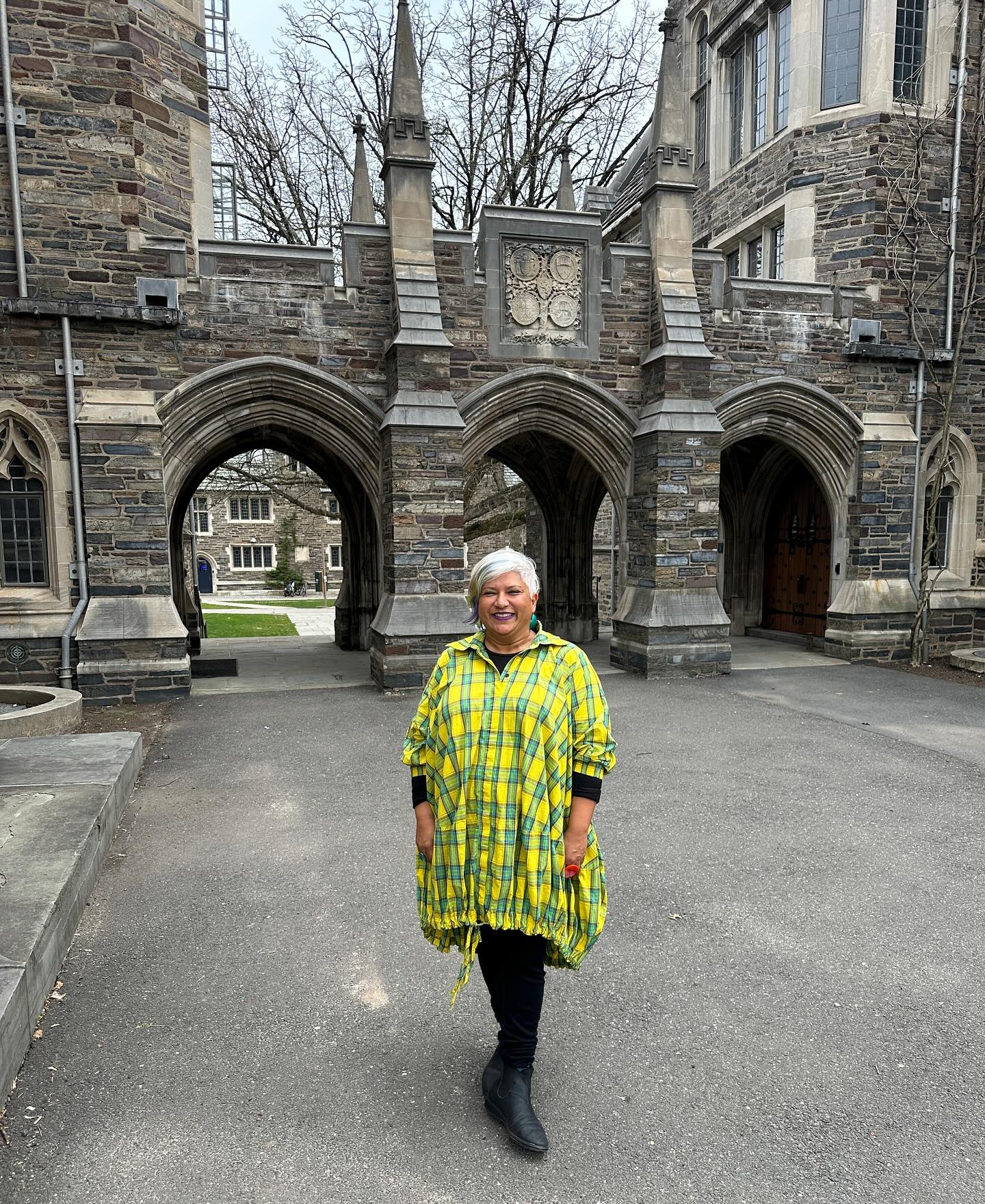
It’s summer in Kulin country and the snakes are active! I was born in the year of the snake and so this Lunar New Year I’m feeling especially attuned to the way snakes engage in seasonal transformation. I hope that this newsletter finds you refreshed and ready for another year. While many of you know what I’m up to on social media, that’s more “in the moment” and I thought it would be good to share a more reflective diary of professional activity in this format. And as most of you know, after working in academia and health services for most of my life I am now working independently as a consultant, which has had me reviewing, mentoring, facilitating, MCing, keynoting, and workshopping, with a wide range of amazing people and organisations. I thought it might be a good opportunity to write a newsletter for colleagues and friends about what I did last year and what’s coming up. I expect these might come out no more than every few months (and they won’t be as long as this one!).
Being in a state of healing
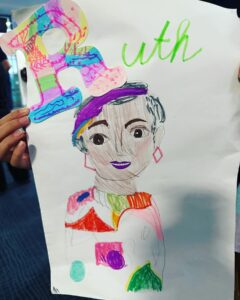
Getting the year off to a flying start, Newcastle University superstar researcher and changemaker Dr Elissa Elvidge invited me to work with The Thurru Indigenous Health Unit at the College of Health Medicine and Wellbeing to help develop a research agenda. “Thurru” roughly translates to being “in a state of healing, and the support is holistic, going beyond academic support, to also offer cultural and pastoral care to all Aboriginal and/or Torres Strait Islander students in the College of Health, Medicine and Wellbeing programs at the University of Newcastle and Joint Medical Program (JMP) students at the University of New England. To date, they have supported 145 Indigenous medical doctors to graduate. The workshop reminded me of how under pressure such services are. They rarely get a chance to meet in person and enjoy each other, let alone have time to think and talk. The day was a lot of fun, and I especially enjoyed the guitar competition! Elissa’s children raised the bar for the best airport welcome ever. One of the girls gifted me a hand drawn portrait, which you can see if you scroll down to the end of this newsletter!
Injured toenail at Laughing Waters
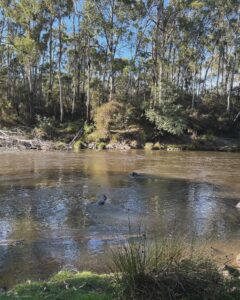
I facilitated a strategy day in February for Footscray Community Arts, an organisation I have long admired. I love how they centre and prioritise communities as makers of culture, and their core principles of curation, custodianship, connection, and care. It was fun and productive spending time with the program team, a talented and passionate group that lives and breathes community-engaged arts. Artistic Program Manager Asha Bee Abraham proposed an overnight retreat at Garambi Baan / Laughing Waters in the Shire of Nillumbik (Shallow Earth). Eugene Howard, the Founding Director of InPlace, established the Garambi Baanj Cultural Precinct and developed a partnership with Wurundjeri Woi-wurrung Cultural Heritage Aboriginal Corporation. Eugene has overseen the restoration of the three state-owned heritage buildings there, and took exceptionally good care of us all. On the morning of the retreat, I accidentally impaled a sliver of wood under my big toenail as I came out of the river from a dip and unfortunately needed to experience the tenacity and skills of the local medical professionals. I was able to regroup pretty quickly once the sliver was removed and we had a fruitful day. I think that it really helped having a solid strategy structure, so when I missed the first two hours of the morning, someone else was able to run with what we had designed.
Aboriginal and Torres Strait Islander Doctors
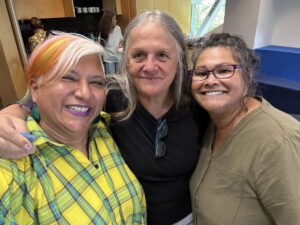
Later that month, I facilitated a face-to-face planning workshop with the Aboriginal and Torres Strait Islander Health Council of The Royal Australian College of General Practitioners (RACGP). The Faculty was established in February 2010 to ensure that GPs are resourced and supported to provide high-quality, culturally responsive, patient-centred healthcare that is valued by Aboriginal and Torres Strait Islander peoples. The Faculty works with Aboriginal and Torres Strait Islander communities and organisations to improve health outcomes. Vanessa Harris, the Manager invited me to facilitate the day and I brought along two long time collaborators and friends: Vicki Couzens, a Keerray Woorroong woman from the Western Districts of Victoria, and Senior knowledge holder for possum skin cloak story and language reclamation and revival in her Gunditjmara mother tongue; and Yuin/Monero artist and cultural leader Gina Maree Bundle; who together created an art workshop as part of the day. I am aware that the value of having a facilitator is that I help organisations achieve their goals, keep discussions and sessions on track, encourage participants to bring difficult issues up so we can strategise around them, and that use my outsider status to push, challenge and guide participants. But it was also really wonderful to have Vicki and Gina there undertaking a creative activity with members, which meant I could also listen and observe and pick up on important issues as we tuned into Country and place.
Menopausal March
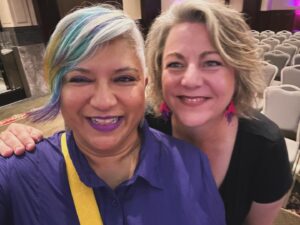
March was menopause month. Some of you might know that I have spent most of my career working with people who are negotiating the biological and social transition to parenthood. Just as this transition can be fraught, so is the transition out of being a birthing person. There is a difference though. The former is largely accompanied by rituals, celebration, and joy. The latter not so much, perhaps because birth is a future-focused event, while menopause is a slower less predictable process that is overlayed with ageism and sexism. I was involved with two activities on menopause for International Women’s Day starting with Melbourne City Council’s “Hot and Bothered by Menopause” morning tea and panel discussion. Award-winning comedian, author and podcaster Nelly Thomas MCed the panel making us laugh (and cry) while we talked about identifying and managing menopausal symptoms and having open conversations at home and in the workplace. My fellow panellists included Dr Sonia Davison, Endocrinologist at the Jean Hailes Medical Centre and past President of the Australasian Menopause Society; Grace Molloy, co-founder and CEO of Menopause Friendly Australia and Genevieve Morris, comedian, actor, and improviser. The second event was a webinar panel discussion to promote a new codesigned resource called In My Prime. Women’s Health Victoria, who are a Victorian feminist, not-for-profit organisation focused on developing gender equity in health invited me to facilitate a discussion with a stellar group of people. In My Prime is an online health and wellbeing resource for women that provides relevant, accessible, and evidence-based health information on topics including menopause and financial security, along with an online exhibition of photographs of nude women (trans and cis inclusive).
Launching a stellar resource for people who work with communities
I read from my chapter on Cultural Safety at the launch of the second edition of the book The Relationship is the Project at Readings in the Emporium in Melbourne in March. Two of the editors Jade Lillie and Kate Larsen Keys hosted the event (coedited by Cara Kirkwood and Jax Brown). The brilliant CQ Quinan read from their chapter on gender and public spaces, and the indomitable arts governance queen, Esther Anatolitis spoke about the role of institutions. If you don’t already have a copy, this updated and expanded edition with 40 thought leaders across the arts, cultural, and community sectors is a stellar resource for people deeply collaborating with communities.
Creating spaces for open dialogue
I also facilitated four all staff workshops for the Australian Centre For Contemporary Art a contemporary art gallery in Melbourne (ACCA). I have been a regular visitor to ACCA and love how they support artists to make risky experimental work that promotes new and critical thinking while also engaging diverse communities. For the co-designed workshops, Max Delany, Claire Richardson, and Laura De Neefe invited me to create a space for open dialogue across the team. I think what I enjoyed most about this work, was the massive commitment the team had to this work and the iterative process we undertook for these workshops to clarify a shared purpose.
Guest lecturing at Princeton University
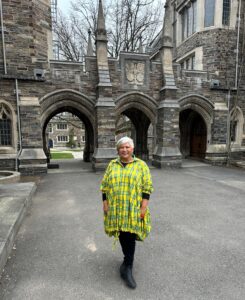
In April, Anna Arabindan-Kesson, Associate Professor of African American and Black Diasporic art with a joint appointment in the Department of Art and Archaeology at Princeton University, invited me to guest lecture in a course called Medicine, Literature and the Visual Arts, co-lead with Prof. Elena Fratto. Anna was born in Sri Lanka and completed her nursing education in Aotearoa, working in the UK before completing her PhD at Yale University. She’s the author of Black Bodies, White Gold: Art, Cotton, and Commerce in the Atlantic World and she directs Art Hx which was formed in 2020 to address how medicine, art, and race informed each other in the British Empire. During my week-long visit, I lectured about Cultural Safety and facilitated seven precepts (tutorials) with Christopher Barrett-Lennard, Dylan Blau Edelstein, and Molly O’Brien. The course explores the different ways that medicine is represented in literature and the visual arts and uses storytelling to examine medical and existential themes including death and dying, epidemics, caregiving, disability, and public health. It was a highlight teaching and meeting students at Princeton and I loved the experience of teaching in another country with stellar resources and facilities. It reminded me about visiting one of my PhD supervisors who was based in Seattle at the University of Washington. I only visited David Allen once but the quality of campus services in a large North American university blew my mind completely.
A play about aged care workers
On my return from Princeton, I worked with Peta Murray my fellow RMIT Vice-Chancellor’s Research Fellow, teacher of creative writing, academic researcher, playwright, writer of short stories and essays, freelance dramaturg, director and occasional performer. We had completed a piece of research together with Bernardo Figueiredo, Dein Vindigni, Prasad Podugu, Jenny Robinson, Christina David, Dawn Wong Lit Wan and Nguyen Luu about the experiences of aged-care workers during the COVID-19 pandemic. Peta and I worked together to produce a short play as a research output that we performed for international researchers from the Imagining Age-Friendly Communities within Communities project. The play was included in a lively and engaging showcase devised by Peta of Naarm’s distinctive interventions into the Arts Ageing Activism space at Footscray Community Arts. I have had a long interest in how we might make research which is publically funded, available to the public, and spent three years at RMIT University doing this kind of work of research translation in my Fellowship. Peta’s play was amazing in ways I couldn’t have anticipated.
Resourcing settlement workers to navigate boundaries
One of my favourite teaching topics is the issue of boundaries. With a background in nursing, I know that one can be over-helpful or under-helpful and that somewhere in the middle is the zone of helpfulness where we ought to operate. But our ideas about boundaries are both personal and cultural. I enjoyed workshopping through boundaries with the Settlement Engagement and Transition Support (SETS) program Community of Practice (CoP) in an online workshop. I have delivered professional development for the community of practice since 2020 and I love how it allows service providers who support refugees and ‘vulnerable’ migrants to collaborate, and share best practice and innovative ideas nationally.
Making fashion equitable
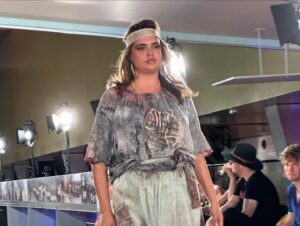
Those who know me well, know that I love fashion! As a plus size person, I am interested in how we can express ourselves through clothing. The fashion industry like other institutions replicates similar barriers to participation for marginalised groups. At the structural level, there can be a lack of culturally diverse representation, particularly in leadership as well as payment inequities. At the interpersonal level models are “othered” or exposed to racist remarks about physical appearance, and sometimes routine practices can be isolating and demeaning. For example not having culturally appropriate styling equipment including hair tools and products available. In May Grace Dlabik, Director of BE. ONE and founder of BE. invited me to work with her and Melbourne Fashion Week (M/FW) to contribute to creating an Inclusion and Equity Policy as the basis for an environment, and event that explicitly and intentionally cultivates justice, equity, diversity and inclusion. Grace is an amazing interdisciplinary artist and an Austrian/Hungarian and Papua New Guinean woman from Lavaipia clan of Lese Oalai, and Motuan clan Botai of Hanuabada. I facilitated three Roundtables with the City of Melbourne. One was with models, exploring their concerns and another was held with industry professionals including stylists and agents communicating those concerns. A third roundtable was held called Breaking Down Barriers in fashion as part of Melbourne Fashion Week (M/FW) Conversations in October. Many thanks to City of Melbourne, Jacinta O’Malley, Grace Dlabik, Matthew Flinn and Tanya Tribuzio for being such great folks to work with
Cultural Safety Salon on Kaurna country
Mary Freer the Founder and Director of the Compassion Revolution (CR) brought me down to Tarntanya, Kaurna country later that week. The revolution’s purpose is to create beautiful interventions and safe spaces, that can build compassion within healthcare organisations, people, and places. I have dedicated my entire professional life to contributing to creating a kind, caring, competent, and culturally safe health system. Mary who is a dynamo, pocket rocket, and friend wanted me to speak about Cultural Safety at the CR second bi-monthly Salon Series. I have deep gratitude for my Māori nursing colleagues who have shaped my lifelong commitment to Cultural Safety in my nursing practice, education, and research over 40 years. It was a real privilege to hear stories from Uncle Mickey Kumatpi O’Brien, a Senior Kaurna and Narrunga man, and to spend time with other revolution team members Amy Milhinch and Lou Pyman. I have been fortunate to speak at several of the Compassion Revolution conferences and highly recommend attending them. In July I was invited to be on a panel with fellow panellists Nara Wilson, and Esther Anatolitis on Cultural Safety in the Arts for the Arts Industry Council of South Australia a non-government membership-based not-for-profit advocating on behalf of the arts in SA. I spoke about the history of Cultural Safety / “Kawa Whakaruruhau” as a health systems directive in Aotearoa fought for by wahine Māori. How Irihapeti Ramsden’s vision has not been actualised in practice (let alone pedagogy). How this wero (challenge) “to reorient the training of health professionals towards a more critical understanding of colonial structures and their impacts on contemporary Māori” has been let down by a lack of resourcing and commitment. Plus, we discussed how Cultural Safety has evolved from an indigenous-led bicultural framework to a more inclusive cross-cultural framework for working with diverse patient populations in Aotearoa.
Cultural Safety on Gadigal country
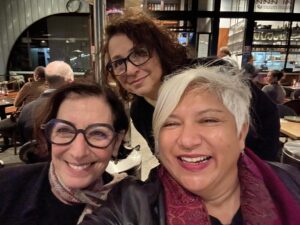
Diversity Arts Australia (DARTS) is a significant voice for ethno-cultural and migrant racial equity in the arts, cultural and creative industries. They advocate for an arts sector that reflects the diversity of the Australian population whether on screens, stages, audiences, galleries, books, boards, committees, and leadership. Importantly they support the creative sector in developing practical and strategic ways to influence the stories and cultural landscape in Australia. At the helm is CEO Lena Nahlous who is a dynamic force for justice, equity, diversity, and inclusion in the arts. This ability to promote cultural understanding and artistic endeavours within or between communities of different cultural and/or linguistic backgrounds was recognised when she was awarded The Arts and Culture Medal in honour of Carla Zampatti last year. I have collaborated with DARTS for many years, facilitating many workshops online since 2020 and being on the reference group for their equity and inclusion capacity-building program: Fair Play. We got to co-facilitate two in-person workshops on Cultural Safety for one of Australia’s major arts companies.
Keeping a toehold in academic world
Teaching in the course Creative Practice in Place: Working on Unceded Lands at RMIT University for a second time, as a person of colour (POC) settler has allowed me to familiarise myself with scholarly work around settler complicity in Indigenous dispossession in Australia. Bonus is that I get to do it with friends and photography dream crew Jody Haines, a Palawa/Tommeginne based in Naarm/Melbourne (who also did my head shots), and Alan Hill from a white settler background. We invite students from photography fashion/graphic and industrial design, ceramics, and visual arts to think about how their identities inflect their creative practice in the context of Australia’s colonial history and First Peoples’ sovereignty. I still keep a toehold in academia by examining PhDs, reviewing for journals and as an Editorial Board member of the Journal of Advanced Nursing. I currently co-supervise RN Sam Petric’s PhD research project with fellow sociologists Distinguished Professor Kerry Robinson and Associate Professor Lucy Nicholas from Western Sydney University. The PhD examines how the Australian nursing profession is experienced as culturally safe/unsafe for trans and gender diverse (TGD) nurses and if the framework of cultural safety is adequate for supporting workplace safety and inclusion needs of TGD nurses. It’s been great seeing the publication of work I have been doing with Sukhmani Khorana and Bhavya Chitranshi: Using Pregnancy and Parenting Apps and Social Media During COVID-19: Absence and Sociality, Agency and Cultural Negotiations for South Asian–Origin Women in Australia. Our research found that pre-existing limitations of health care providers, digital platforms, and apps with regard to culturally and linguistically diverse (CALD) women in Australia were amplified during the pandemic. Online Facebook groups were a significant source of information and support for the participants in the absence of family during the lockdowns in Melbourne and Sydney. In November I was pleased to see the publication of Refugee Health Care: A Handbook for Health and Social Care Providers by Serena Moran, Marcia Gawith, and Jonathan Kennedy. I was a reviewer/adviser for the section on Reproductive health. The Handbook provides guidance on the delivery of effective, culturally appropriate and safe healthcare for former refugees and their families in Aotearoa New Zealand.
Chunky Move at Hanging Rock (Ngannelong)
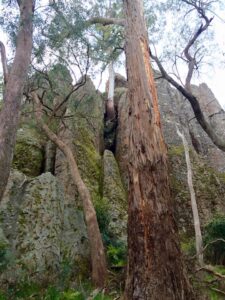
Chunky Move, one of the most influential dance companies in Australia invited me to facilitate a day-long staff retreat in October. Chunky Move’s dance works are bold, visually striking, and genre-defying, but they are also committed to ensuring that all bodies are visible and valued. To that end, I loved working with Executive Director Kristy Ayre, Artistic Director Antony Hamilton, and their staff to think about their Equity Action Plan. Kristy organised a van to take us to Hanging Rock (Ngannelong), a sacred gathering place for Dja Dja Wurrung, Woi Wurrung and Taungurung Peoples, where we had a walk before moving to Romsey Hub as inclement weather was forecast. I think all workshops should start with being outside somewhere beautiful like this (but maybe not with getting wood under a toenail). I am excited about the work we will continue to do in 2025.
Transformation through discomfort and uncertainty
Local Health Advisory Councils (HACs) are a really important part of the health system in regional South Australia. As well as being community members, they advise the Minister on health issues related to specific groups or regions. In October I gave a keynote on the traditional lands of the Ngadjuri people at the 2024 Barossa Hills Fleurieu Local Health Network (BHFLHN) Combined Regional Health Advisory Council Conference. The BHFLHN manage the delivery of public hospital services and community-based health services for the Barossa Hills Fleurieu region, and hosted the annual regional Health Advisory Council Conference. Their theme was disruption and I drew upon the BHFLHN’s impressive Reflect Reconciliation Action Plan 2024-2025 to speak about the art of care, the arts and health, and placemaking. Specifically, I spoke about Cultural Safety and how institutions and people inside them rarely experience transformative change without discomfort and uncertainty. Afterwards, I was approached by an attendee who asked me whether colonisation had been good for India and for places that have been colonised. So perhaps there’s still some way to go. Nevertheless, I found the conference informative about the needs of remote communities, and I enjoyed meeting the dynamic and ebullient CEO Bronwyn Masters and First Nations crew, particularly Bec Kimlin.
Thank you for reading this first newsletter – more happened last year than I thought! I hope you found some of it interesting. I plan to do shorter updates every few months. If you’d rather not add more volume to your inbox, you can unsubscribe from this newsletter at any time by clicking on the link below. Alternatively, I’m easily found on Linked In. And of course, if you’ve got your own project that you think we could collaborate on, please get in touch!
Warm regards,
Ruth