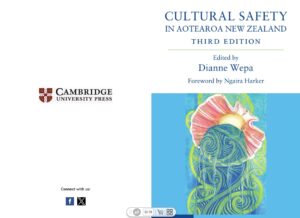
The concept of Kawa whakaruruhau Cultural Safety has travelled across time and space since I was introduced to it as a nurse. I wrote about my own journey with the concept and how it is now becoming misused in an Overland article earlier this year:
As I was neither a white settler nor Indigenous Māori, and felt ambivalently positioned as a settler of colour in discourses of “biculturalism”, kawa whakaruruhau represented to me a pathway for just care, for righting the wrongs of health inequities, and for ensuring that I had an ethical relationship to the whenua (land) that my family had migrated to. I enthusiastically embraced Cultural Safety — despite what I now understand to be inevitable issues in non-Indigenous enthusiasm for supporting Indigenous political action — seeing it as a mechanism for addressing my own complicity in colonial processes of dispossession, a way of taking responsibility and finding accountability.
In my youthful enthusiasm, I believed that Cultural Safety could be, as Irihapeti Ramsden described it, a korowai: a cloak that could also shelter negatively racialised others and those at the sharp end of the health system, by galvanising healthcare workers to create change. I even wrote — optimistically — that Cultural Safety could enable wellness for all. However, I now support arguments that the broadening of Cultural Safety from being an Indigenous-led critical intervention in health have “watered it down” so it is no longer fit for purpose — a view supported by Chelsea Watego et al (see also Jennifer Roberts excellent dissertation).
Despite my reservations about where the concept is headed, I’m happy the third edition of Cultural Safety in Aotearoa New Zealand has been published. The chapters mark a time when Cultural Safety could be seen as a widespread liberatory framework or call to action, in support of First Nations voices, rights and aspirations. To give you a taster, excerpts and references from the two chapters I have authored are below.
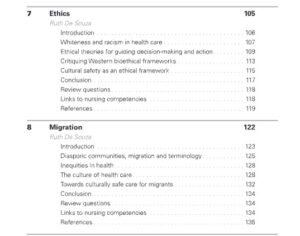
Ethics (Chapter Seven, pages 105-119)
The climate catastrophe and COVID-19 pandemic have exposed racism as a global public health emergency and determinant of health (De Souza, 2021). The long shadow of colonialism, structural violence and over-policing (Smith & Foth, 2021) in settler colonies like Aotearoa New Zealand have accompanied a moral imperative to transform hegemonic and colonial Pākeha institutions. For Māori, this has meant reassertion of self-determination and decolonisation, and for cultural minorities a focus on racial justice. This urgent institutional transformation requires the re-examination of healthcare and its professional and ethical frameworks. Two criticisms of ethics have been articulated in this contemporary context; the first is that hegemonic frameworks centre whiteness and reinscribe it (Anderson, 2021), and the second is that the frameworks fail to dismantle racism and maintain it through silence around racial justice (Mayes et al., 2021). This chapter outlines dominant frameworks in bioethics and recommends that ethical frameworks must both be deconstructed and supplemented if practitioners are to practice in culturally safe ways. I build on the challenge extended by Smith & Foth (2021) and invite readers to expand their ethical reasoning to include tools and theories informed by cultural safety and Indigenous sovereignties.
References
Anderson, W. (2021). The whiteness of bioethics. Journal of Bioethical Inquiry 18, 93–97. https://doi.org/10.1007/s11673-020-10075-y
Aristotle. (2014). Nicomachean ethics (R. C. Bartlett and S. D. Collins, trans.). University of Chicago Press. (Original work written 4th century BCE)
Beauchamp, T. L., and Childress, J. F. (1983). Principles of biomedical ethics, 2nd ed. Oxford University Press.
Beauchamp, T. L., and Childress, J. F. (2001). Principles of biomedical ethics, 5th ed. Oxford University Press.
Bond, C. J., Singh, D., and Tyson, S. (2021). Black bodies and bioethics: Debunking mythologies of benevolence and beneficence in contemporary Indigenous health research in colonial Australia. Journal of Bioethical Inquiry 18, 83–92. https://doi.org/10.1007/s11673-020-10079-8
Borell, B. (2021). The role of emotion in understanding whiteness. Journal of Bioethical Inquiry 18, 23–31. https://doi.org/10.1007/s11673-020-10074-z
Botes, A. (2000). A comparison between the ethics of justice and the ethics of care. Journal of Advanced Nursing 32(5), 1071–1075. https://doi.org/10.1046/j.1365-2648.2000.01576.x
Chatterjee, P. (2023). The inheritance and repetition of colonial practices of dispossession. Environment and Planning D: Society and Space 41(5), 805–825. https://doi.org/10.1177/02637758231206628
Crichton, B. (2017). Fa’asāmoa bioethics and healthcare decision-making in New Zealand. Journal of Sāmoan Studies 7(3), 47–61.
Crigger, N. J. (1997). The trouble with caring: A review of eight arguments against an ethic of care. Journal of Professional Nursing 13(4), 217–221. https://doi.org/10.1016/S8755-7223(97)80091-9
De Souza, R. (2021). Lessons on exclusion from past pandemics. Hive 36, 16–17. https://www.acn.edu.au/wp-content/uploads/the-hive-36-summer-2021.pdf
De Souza, R. (2013). Regulating migrant maternity: Nursing and midwifery’s emancipatory aims and assimilatory practices. Nursing Inquiry 20(4), 293–304. https://doi.org/10.1111/nin.12020
Delany, C., Parker, M., Murphy, G., Guillemin, M., Hall, M. G., Fuscaldo, G., and Gillam, L. (2013). Addressing cultural diversity in health ethics education. Australian Government Office of Learning and Teaching.
Doane, G. H. (2002). In the spirit of creativity: The learning and teaching of ethics in nursing. Journal of Advanced Nursing 39(6), 521–528. https://doi.org/10.1046/j.1365-2648.2002.02320.x
Ellis, A., Telford, L., Lloyd, A., and Briggs, D. (2021). For the greater good: Sacrificial violence and the coronavirus pandemic. Journal of Contemporary Crime, Harm, and Ethics 1(1), 1–22. https://doi.org/10.19164/jcche.v1i1.1155 120
Held, V. (2011). Morality, care, and international law. Ethics & Global Politics 4(3), 173–194.
Johnstone, M.-J. (2022). Bioethics: A nursing perspective. Elsevier Health Sciences. Google Play. https://play.google.com/store/books/details?id=PsWHEAAAQBAJ
Johnstone, M.-J., and Kanitsaki, O. (2009). Ethics and advance care planning in a culturally diverse society. Journal of Transcultural Nursing 20(4), 71–91. https://doi.org/10.1177/1043659609340803
Kant, I. (2012). Groundwork of the metaphysics of morals (M. Gregor and J. Timmermann, trans.). Cambridge University Press. (Original work published 1785)
Lokugamage, A. U., Robinson, N., Pathberiya, S. D. C., Wong, S., and Douglass, C. (2022). Respectful maternity care in the UK using a decolonial lens. SN Social Sciences 2(12), 267. https://doi.org/10.1007/s43545-022-00576-5
Mayes, C. (2020). White medicine, white ethics: On the historical formation of racism in Australian healthcare. Australian Journal of French Studies 44(3), 287–302. https://doi.org/10.1080/14443058.2020.1796754
Mayes, C. (2021). Race, reproduction, and biopolitics: A review essay. Journal of Bioethical Inquiry 18, 99–107. https://doi.org/10.1007/s11673-020-10071-2
Mayes, C., Paradies, Y., and Elias, A. (2021). Institutional racism, whiteness, and the role of critical bioethics. Journal of Bioethical Inquiry 18, 9–12. https://doi.org/10.1007/s11673-021-101035
Melé, D., and Sánchez-Runde, C. (2013). Cultural diversity and universal ethics in a global world. Journal of Business Ethics 116(4), 681–687. https://doi.org/10.1007/s10551-013-1814-z
Mukandi, B. (2021). Being seen by the doctor: A meditation on power, institutional racism, and medical ethics. Journal of Bioethical Inquiry 18, 33–44. https://doi.org/10.1007/s11673-021-10087-2
Narruhn, R., and Schellenberg, I. R. (2013). Caring ethics and a Somali reproductive dilemma. Nursing Ethics 20(4), 366–381. https://doi.org/10.1177/0969733012453363
New Zealand Nurses Organisation. (2019). Code of ethics. https://www.nzno.org.nz/Portals/0/publications/Guideline%20-%20Code%20of%20Ethics%202019.pdf
Ngo, H. (2021). The habits of racism: A phenomenology of racism and racialized embodiment. Lanham.
Nursing Council of New Zealand / Te Kaunihera Tapuhi o Aotearoa. (2012). Code of conduct for nurses. http://www.nursingcouncil.org.nz/Nurses/Code-of-Conduct
Nursing Council of New Zealand / Te Kaunihera Tapuhi o Aotearoa. (2025). Standards of competence for registered nurses.
Ornelas, I. J. (2008). Cultural competency at the community level: A strategy for reducing racial and ethnic disparities. Cambridge Quarterly of Healthcare Ethics 17(2), 185–194. https://doi.org/10.1017/S0963180108080213121
Partners in the BIOMED II Project. (1998, November).The Barcelona declaration on policy proposals to the European Commission on basic ethical principles in bioethics and biolaw. Centre for Ethics and Law Copenhagen. Polo di Biodiritto. https://polodibiodiritto.it/imgpag/files/Dichiaraz-Barcellona-Biodiritto.pdf
Shraya, V. (2016). Even this page is white. Coach House Books.
Smith, K. M., and Foth, T. (2021). Tomorrow is cancelled: Rethinking nursing resistance as insurrection. Aporia 13(1), 15–25. https://doi.org/10.18192/aporia.v13i1.5263
Stephany, K. (2020). The ethic of care: A moral compass for Canadian nursing practice, rev. ed. Bentham Science Publishers. Google Play. https://play.google.com/store/books/details?id=2tnVDwAAQBAJ
Stone, J. R. (2008). Healthcare inequality, cross-cultural training, and bioethics: Principles and applications. Cambridge Quarterly of Healthcare Ethics 17(2), 216–226. https://doi.org/10.1017/S0963180108080249
Tronto, J. C. (1998). An ethic of care. Generations 22(3), 15–20.
Turner, L. (2003). Bioethics in a multicultural world: Medicine and morality in pluralistic settings. Health Care Analysis 11(2), 99–117. https://doi.org/10.1023/A:1025620211852
United Nations General Assembly. (1948). Universal declaration of human rights. United Nations. http://www.un.org/en/documents/udhr/
Varcoe, C., Browne, A. J., and Cender, L. (2014). Promoting social justice and equity by practicing nursing to address structural inequities and structural violence. In P. N. Kagan, M. C. Smith and P. L. Chinn (eds), Philosophies and practices of emancipatory nursing: Social justice as praxis, 266–284. Routledge.
Woods, M. (2010). Cultural safety and the socioethical nurse. Nursing Ethics 17(6), 715–725. https://doi.org/10.1177/0969733010379296
Migration (Chapter Eight, pages 122- 135)
Dedication: This chapter is dedicated to the 51 Shuhada (martyrs) of the Christchurch terror attack, New Zealand, in March 2019.
“At the age of 7, my family immigrates from Zimbabwe to Aotearoa. I pass through Customs but my culture is made to stay behind. In the classroom, I am afraid my tongue will beat back to its African rhythm, be concussed by fear, have amnesia turn all its memories to dust.
Yesterday I was African, today I am lost. Maybe I was blinded by the neon sign of opportunity, failed to read the fine print that read: ‘assimilate or go back where you came from’. […] To be a child of the diaspora is to battle two tongues and be forced to trade one for another so much so that my articulation of the English language now tastes like the un-birthing of my country.”
Takunda Muzondiwa, “Race Unity Speech” (2019)
What does it mean to move to a country, by force or willingly, and then have to navigate a new system, a hundred new systems that make up your new life? Or what might it mean to be born in Aotearoa New Zealand or for your family to have been here for multiple generations and yet to be made to feel forever that you do not belong? Do systems have a place in promoting wellbeing and belonging? What might it mean to work in health care or social services with people and communities that are culturally different from your own? This chapter invites you to go beyond thinking about skills and competencies for working with difference or about models of diversity and to instead zoom out and think about how bigger social and political contexts impact on care. How does the media, your family, politicians and others shape how you treat others? The concept of cultural safety invites practitioners to engage in critical and reflective processes to understand these contexts and histories. It is more likely that if we do so, we might transform the unequal societal power relations that impact on the life chances and health outcomes of others.
This chapter outlines how whakawhanaungatanga (making connections) might be more useful as a concept for working with others than terms like diversity and inclusion. Indigenous concepts such as cultural safety are discussed as a way of working with diasporic communities, and the chapter reviews histories of diasporic communities that highlight the unequal social relations that have been produced through policy. Health practitioners’ relative power and privilege will be considered along with the invitation to zoom out to think about big histories and zoom in on how you think about people who might have a religion or culture that is different from one’s own.
References
Allen, D. G. (1999). Knowledge, politics, culture and gender: A discourse perspective. Canadian Journal of Nursing Research Archive 30(4), 227–234. https://cjnr.archive.mcgill.ca/article/view/1321
Allen, D. G. (2006). Whiteness and difference in nursing. Nursing Philosophy 7(2), 65–78. https://doi.org/10.1111/j.1466-769X.2006.00255.x
Anderson, W. P. (1998). Where is the postcolonial history of medicine? Bulletin of the History of Medicine 72(3), 522–530. https://doi.org/10.1353/bhm.1998.0158
Bondi, L. (1993). Locating identity politics. In M. Keith and S. Pile (eds), Place and the politics of identity, 84–101. Routledge. https://doi.org/10.4324/9780203016695
Bowes, A., and Domokos, T. M. (1998). Negotiating breast-feeding: Pakistani women, white women and their experiences in hospital and at home. Sociological Research Online 3(3), 54–69. https://doi.org/10.5153/sro.160
Browne, A. J. (2001). The influence of liberal political ideology on nursing science. Nursing Inquiry 8(2), 118–129. https://doi.org/10.1046/j.1440-1800.2001.00095.x
Browne, A. J., and Varcoe, C. (2006). Critical cultural perspectives and health care involving Aboriginal peoples. Contemporary Nurse 22(2), 155–167. https://doi.org/10.5172/conu.2006.22.2.155
Burman, E. (2006). (How) can critical psychology help feminist antiracist work? International Journal of Critical Psychology 18, 9–33.
Camiscioli, E. (2001). Producing citizens, reproducing the ‘French race’: Immigration, demography, and pronatalism in early twentieth-century France. Gender & History 13(3), 593–621. https://doi.org/10.1111/1468-0424.00245
Collins, F. L., Simon-Kumar, R., and Friesen, W. (2020). Introduction: The intersections of inequality, migration and diversification. In R. Simon-Kumar, F. L. Collins and W. Friesen (eds), Intersections of inequality, migration and diversification: The politics of mobility in Aotearoa/New Zealand, 1–15. Springer International Publishing. https://doi.org/10.1007/978-3-030-19099-6_1
Culley, L. (2006). Transcending transculturalism? Race, ethnicity and health-care. Nursing Inquiry 13(2), 144–153. https://doi.org/10.1111/j.1440-1800.2006.00311.x
Davies, M. M., and Bath, P. A. (2001). The maternity information concerns of Somali women in the United Kingdom. Journal of Advanced Nursing 36(2), 237–245. https://doi.org/10.1046/j.1365-2648.2001.01964.x
Davies, M. M., and Papadopoulos, I. (2006). Notions of motherhood and the maternity needs of Arab Muslim women. In I. Papadopoulos (ed.), Transcultural health and social care: The development of culturally competent practitioners, 145–163. Elsevier.
Ejiogu, N. (2009). A clinic for the world: Race, biomedical citizenship, and gendered national subject formation in Canada. Master’s thesis, University of Toronto.
Environmental Health Intelligence New Zealand. (n.d.). Ethnic profile. Retrieved 31 October 2023. https://www.ehinz.ac.nz/indicators/population-vulnerability/ethnic-profile/
Fahy, K. (2007). An Australian history of the subordination of midwifery. Women and Birth 20(1), 25–29. https://doi.org/10.1016/j.wombi.2006.08.003
Gamble, V. N. (1997). Under the shadow of Tuskegee: African Americans and health care. American Journal of Public Health 87(11), 1773–1778.
Gilbert, H. (2003). Great adventures in nursing: Colonial discourse and health care delivery in Canada’s north. Jouvert 7(2). https://legacy.chass.ncsu.edu/jouvert/v7i2/gilber.htm
Lewis, M. (1988). The ‘health of the race’ and infant health in New South Wales: Perspectives on medicine and empire. In R. MacLeod and M. Lewis (eds), Disease, medicine and empire: Perspectives on Western medicine and the experience of European expansion, 301–315. Routledge.
Marlowe, J. (2020). Refugee resettlement social media and the social organization of difference. Global Networks 20(2), 274–291. https://doi.org/10.1111/glob.12233
Marlowe, J., Malihi, A. Z., Milne, B., McLay, J., and Chiang, A. (2023). Settlement trajectories of nearly 25,000 forced migrants in New Zealand: Longitudinal insights from administrative data. Kōtuitui 19(1), 21–44. https://doi.org/10.1080/1177083X.2023.2214606
Marmot, M., Allen, J., Boyce, T., Goldblatt, P., and Morrison, J. (2020). Health equity in England: The Marmot review 10 years on. Institute of Health Equity. https://www.instituteofhealthequity.org/resources-reports/marmot-review-10-years-on/the-marmot-review-10-years-on-full-report.pdf
Muzondiwa, T. (2019). Yesterday I was African, today I am lost: A speech by Takunda Muzondiwa. The Spinoff. https://thespinoff.co.nz/society/16-05-2019/yesterday-i-was-african-today-i-am-lost-a-speech-by-takunda-muzondiwa#.
Nestel, S. (2006). Obstructed labour: Race and gender in the re-emergence of midwifery. UBC Press.
Ngata, T., Rata, A., and Santos, D. (2021). Race-based hate crime in Aotearoa. MAI Journal 10(2), 207–215. https://doi.org/10.20507/MAIJournal.2021.10.2.14
Nursing Council of New Zealand / Te Kaunihera Tapuhi o Aotearoa. (2011). Guidelines for cultural safety, the Treaty of Waitangi and Maori health in nursing education and practice.
Nursing Council of New Zealand / Te Kaunihera Tapuhi o Aotearoa. (2025). Standards of competence for registered nurses.
Pulotu-Endemann, F. K. (2001). Fonofale model of health. Pacific Health Dialog 8(1), 5–7.
Ramsden, I. (1997). Cultural safety in nursing education in Aotearoa. Nursing Praxis in New Zealand 12(3), 4–10.
Ramsden, I. (2002). Cultural safety and nursing education in Aotearoa and Te Waipounamu. Doctoral thesis, Victoria University of Wellington.
Ramsden, I. (2007). Towards cultural safety. In D. Wepa (ed.), Cultural safety in Aotearoa New Zealand, 2–19. Pearson Education New Zealand.
Rata, A., and Al-Asaad, F. (2019). Whakawhanaungatanga as a Māori approach to Indigenous-settler of colour relationship building. New Zealand Population Review 45, 211–233. https://www.waikato.ac.nz/assets/Uploads/Research/Research-entities/CaDDANZ/Whakawhanaungatanga-as-a-Maori-Approach-to-IndigenousSettler-of-colour-Relationship-Building.pdf
Razack, S. H. (2004). Imperilled Muslim women, dangerous Muslim men and civilised Europeans: Legal and social responses to forced marriages. Feminist Legal Studies 12(2), 129–174. https://doi.org/10.1023/B:FEST.0000043305.66172.92
Reed, K. (2003). Worlds of health: Exploring the health choices of British Asian mothers. Praeger.
Roberts, P., and Sutch, P. (2004). An introduction to political thought: Key concepts and thinkers. Edinburgh University Press.
Robertson, S. (2019). Status-making: Rethinking migrant categorization. Journal of Sociology 55(2), 219–233. https://doi.org/10.1177/1440783318791761
Scott, J. W. (1992). Multiculturalism and the politics of identity. October 61, 12–19. https://doi.org/10.2307/778780
Stoler, A. L. (1995). Race and the education of desire: Foucault’s history of sexuality and the colonial order of things. Duke University Press.
Thiruselvam, N. (2019). Care ethics and narratives of the ‘grateful refugee’ and ‘model minority’: A postcolonial feminist observation of New Zealand in the wake of the Christchurch terror attacks. Women’s Studies Journal 33(1–2), 62–70. http://www.wsanz.org.nz/journal/docs/WSJNZ331-2Thiruselvam62-70.pdf
United Nations High Commissioner for Refugees. (2011). The 1951 convention relating to the status of refugees and its 1967 protocol. https://www.unhcr.org/sites/default/files/legacy-pdf/4ec262df9.pdf
United Nations High Commissioner for Refugees. (2024a). Global trends: 138
Forced displacement in 2024. https://www.unhcr.org/sites/default/files/2025-06/global-trends-report-2024.pdf
United Nations High Commissioner for Refugees. (2024b). Türkiye fact sheet. https://www.unhcr.org/turkiye
Walker, K., and Holmes, C. A. (2008). The ‘order of things’: Tracing a history of the present through a re-reading of the past in nursing education. Contemporary Nurse 30(2), 106–118. https://doi.org/10.5172/conu.673.30.2.106
Wikberg, A., and Bondas, T. (2010). A patient perspective in research on intercultural caring in maternity care: A meta-ethnography. International Journal of Qualitative Studies on Health and Well-Being 5(1), 4648. https://doi.org/10.3402/qhw.v5i1.4648